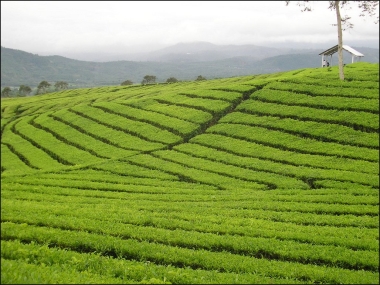
While Sri Lanka may be known for its biodiversity,
this biological wealth is highly threatened—a 2005 survey
found that 17 of Sri Lanka's frogs have disappeared in the past
decade and another 11 species face imminent extinction unless their
habitat is protected. Habitat loss is the leading threat to Sri
Lanka's native ecosystems. Conservation International estimates
that only around 1.5 percent of the island's original forest
remains (U.N. figures are more optimistic). Much of this forest was
lost under British colonial rule, when large tracts of forest were
cleared for rubber, coffee, and tea plantations.
Sri Lanka's
Rainforests can be traced back to the mountains of Gondwanaland
some 20 million years ago. They moved across the island in response
to climate changes through this time but because of the shape of
the mountains always had refugia in the South Western quarter. The
biodiversity developed as a response to the mountains acting as
'islands' during times of drought and desiccation. Thus, the
rainforests contain elements of a relict fauna, once shared with
Africa. The bizarre horned lizards of the Genus Ceratophora are an
example.
These forests
remained generally inviolate since their formation, the Sinhalese
civilizations who maintained historical records going back over
2200 years do not indicate the use of the mountains and rainforests
for settlement or agriculture. It was only towards the 15th and
16th centuries that the montane zone became populated, but even
then, the only anthropomorphic landscapes of consequence were in
the flood plains of the river valleys, which were turned into rice
fields.
The Rainforests
began to be impacted and the "Continuous Forest' landscape gave way
to the "Colonial' landscape' around 1700-1800. Forests were felled
for timber export and plantation industry was in its infancy with
small monocultures of Cinnamon. The large scale felling of forests
began after 1820 when all land without title was deemed 'crown
land' and sold to commercial interests in the West. The 'coffee
boom' of 1835 was a rush for land that was only equalled by the
rush for land during the gold discoveries in the U.S.
The early colonial
landscapes saw the creation of new ecosystems or 'agro ecosystems'
that usually had exotic organisms as the dominant species. They
contained large areas of monoculture, first coffee, then tea,
rubber and coconut; these ecosystems replaced the more diverse
indigenous forms. Coffee and tea replaced montane forests, rubber
replaced lowland rainforest and coconut replaced lowland rainforest
and evergreen forest. A further problem with these crops was the
fact that large quantities of firewood were required in processing
for export. The source of firewood was from the forest ecosystems
of the landscape. Thus this period saw a reduction of indigenous
landscapes not only as a consequence of forest clearing, but also
as a consequence of timber and firewood extraction. Much of the
original agricultural endeavour at this time did not pay any heed
to good management practices. Thus large areas began to loose
topsoil, became impoverished and were abandoned to become fire
maintained grasslands. Indigenous landscapes were transformed, the
new landscape containing far less natural forest.