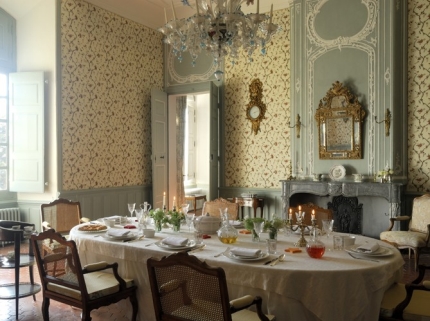
By 1800, Europeans
could see the Age of Discovery’s impact everywhere –
except, apparently, in their standard of living. Spices from Asia
added flavour to meals; tomatoes transformed Mediterranean diets;
and potatoes provided a new and cheap source of calories. Coffee,
tea and chocolate were enjoyed by the upper classes, and
increasingly, lower down the social scale. Silver from the Americas
was used for coins. Sugar from the Caribbean sweetened hot
beverages and preserved the fruits of summer as jam and marmalade.
Cod from Newfoundland arrived on European tables by the boatload.
European fleets and armies fought each other in the far-flung
corners of the earth in a struggle for global supremacy. Many
scholars have thus concluded that globalization began in
1492.
At the same time,
the Age of Discovery apparently did not improve European living
standards. Profits from transatlantic trade were small and overseas
trade did not change factor prices before the 1830s. The
supply of raw materials from the New World was also unimportant.
Thus, Europeans lived none the better as a result of the
discoveries; per capita incomes stagnated prior to the Industrial
Revolution, or even declined.
The Age of
Discoveries raised European living standards importantly through
gains from variety. Global trade after 1500 mattered not because
the quantities involved were large, but because of the novelty of
the goods traded. The ‘Columbian Exchange’ made life
sweeter and more stimulating, by bringing sugar, tea, chocolate,
tobacco, and coffee to European tables. Early modern consumers
increasingly voted with their pocketbooks in favour of these goods
–aggregate consumption of colonial.
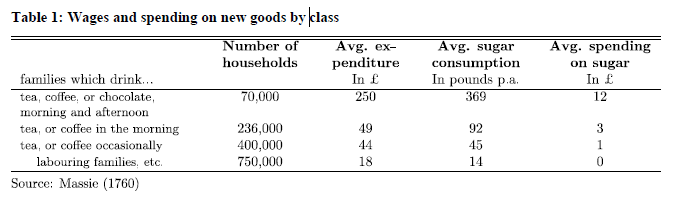
Around 1750 only
about 5% of Europeans were drinking tea, coffee or chocolate
morning and afternoon and this created a limited demand for place
settings to match the this upper class cultural distinction (Table
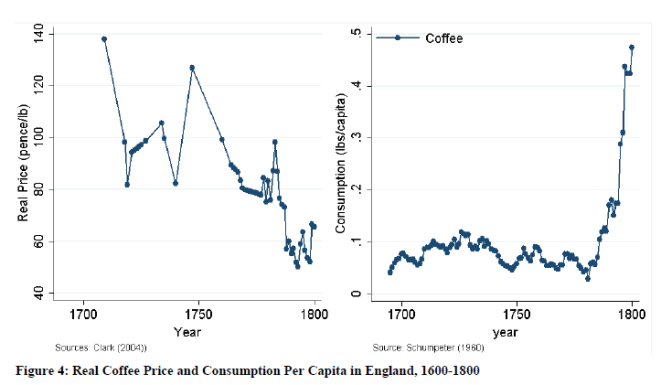
1). In a century from 1700 the price of coffee had
fallen to a third. But there was no increased demand until
the last decade of the 18th century, when it went up ten-fold (Fig
4). This rise was probably due to the spread of a
coffee-drinking culture. The ceramics industry responded by
searching for new ways to bring down the price of table
settings.
Export porcelain
continued to be produced in China into the 1700s. However, during
the eighteenth century the techniques of blue and white production
were taken up by pottery manufacturers in the West. This resulted
in cheap mass production of blue and white transfer patterned
pottery in the UK. The most famous pattern is, of course, the
‘willow pattern’, which was designed by Thomas Minton
in about 1790. The original pattern features a willow tree, a
bridge with three figures crossing, a boat, a pagoda or two, a
garden and a fence. Slightly later patterns also show two birds in
flight. Mass production of pottery featuring this pattern made
items more affordable to middle and working class households, and
established willow-pattern crockery displays on open
shelves.
Since then the way
these luxuries are grown and processed has profound environmental
importance both locally and internationally. Four themes are
intimately related: biodiversity and conservation of forest
ecosystems; agro-chemical use; water pollution from coffee
processing; and soil quality. Each of these factors is critical to
environmental quality.