In the 16th
century, Portuguese traders began importing late Ming dynasty Blue
and white porcelain porcelains to Europe, resulting in the growth
of the Kraak porcelain trade (named after the Portuguese ships
called carracks in which it was transported). In 1602 and 1604, two
Portuguese carracks, the San Yago and Santa Catarina, were captured
by the Dutch and their cargos, which included thousands of items of
porcelain, were auctioned, igniting a European mania for porcelain.
Buyers included the Kings of England and France. Many European
nations then established trading companies in the Far East, the
most important being the Dutch East India Company or VOC. The trade
continued until the mid-17th century when civil wars caused by the
fall of the Ming dynasty in 1644 disrupted suppliers and the
European traders turned to Japan.
As trade developed,
finer quality wares were shipped by private traders who rented
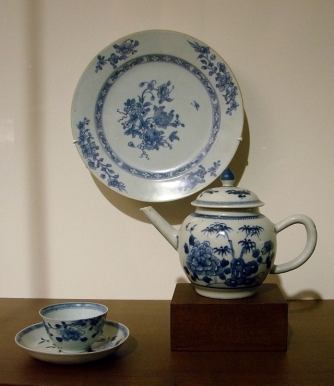
space on the Dutch East India Company ships. The bulk export wares
of the 18th century were typically teawares and dinner services,
often Blue and white decorated with flowers, pine, prunus, bamboo
or with pagoda landscapes, a style that inspired the Willow
pattern. They were sometimes clobbered (enamelled) in the
Netherlands and England to enhance their decorative appeal. By the
late 18th century, imports from China were in decline. Tastes were
changing and competition from new European factories with
mass-production brought about industrialisation took its
toll.
Highly decorative
Canton porcelain was produced throughout the 19th century but the
quality of wares was in decline. By the end of the century, Blue
and white wares in the Kangxi style were produced in large
quantities and almost every earlier style and type was copied into
the 20th century.Chinese export porcelain 18th century